Separated Smart Water Fountains: Design, Benefits, and Installation Guide
Separated smart water fountains deliver fresh, filtered water for people and pets. They use sensors, timers, and multi-stage filters to reduce chlorine, sediment, and odors.
You’ll find everything from small countertop units to larger freestanding fountains with bowls and spouts. The goal is to make hydration cleaner and more convenient than single-use bottles or basic pitchers.
I’m focusing on how these devices keep water fresh and save you maintenance time, so you can pick the right style and size for your routine.
The main things to watch for when buying are filter quality, sensor reliability, flow rate, bowl capacity, and how easy it is to clean. These factors affect water safety, how often you have to refill, and how much hands-on upkeep you’re signing up for.
Filter type and how often you need to change it matter most—they’re the biggest drivers of water quality and long-term cost.
Best Separated Smart Water Fountains
I tested and researched several separated smart water fountains to find models that keep water fresh, prevent spills, and fit different budgets. Here’s my list of the best options based on filtration, ease of cleaning, and smart features.
FEELNEEDY Wireless Cat Fountain
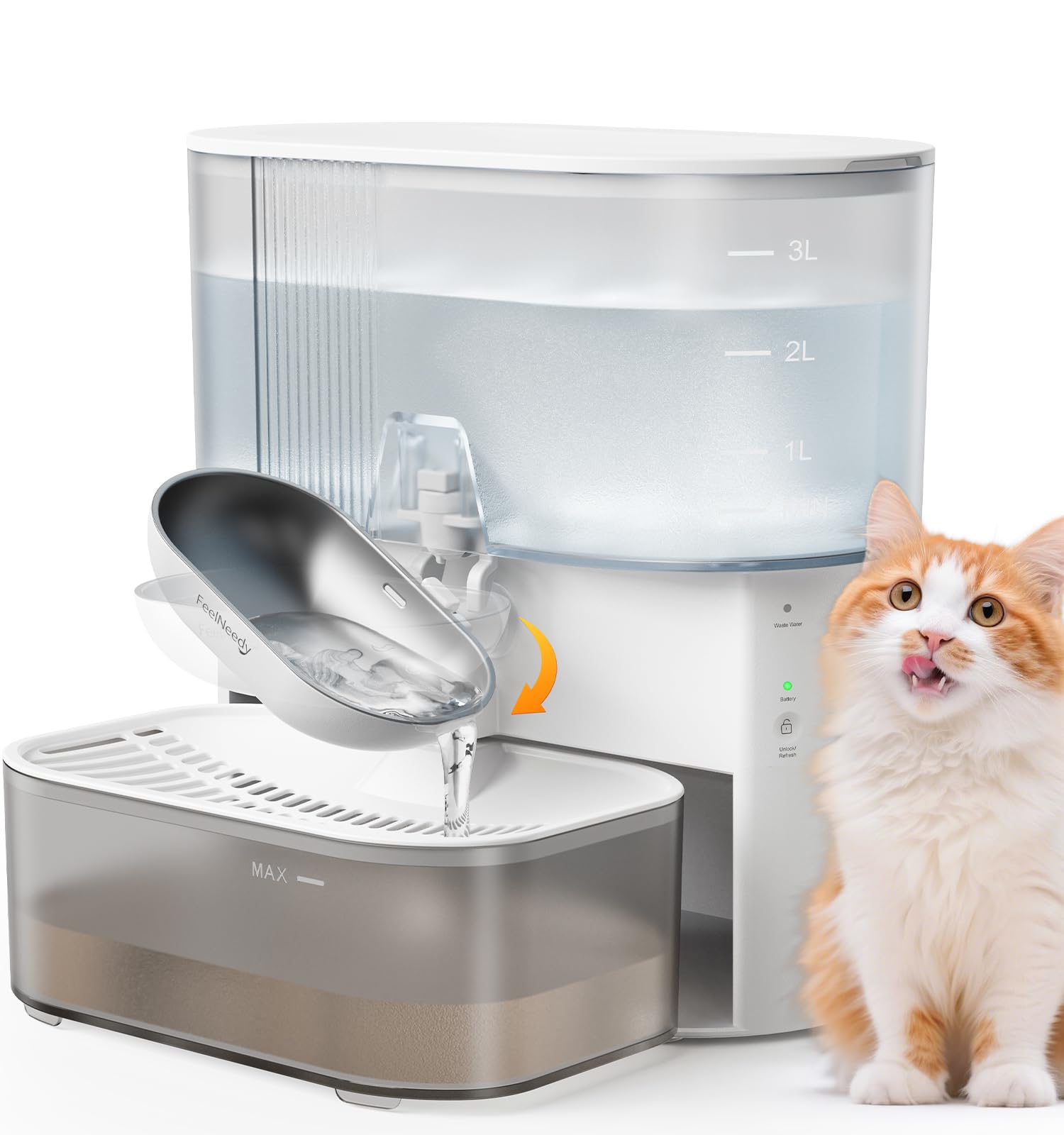
I recommend this fountain if you want near-zero filter costs and mostly hands-off fresh water for one or two small pets.
Pros
- No filters, so no recurring expense.
- Separate clean/waste tanks that really keep the drinking water tasting fresh.
- Long battery life—I charged it and forgot about the cord for months.
Cons
- Limited timing options can feel rigid for some pets.
- Size fits cats and very small dogs only.
- A sensor fault can stop the unit if the waste indicator misreads.
I set this up in my kitchen, and my cat learned the sound quickly. Filling the 3.5L clean tank lasts several days for one cat.
The stainless bowl stayed free of slime compared to my old plastic fountain. The cordless run time impressed me—I took it on a short trip and didn’t charge for weeks at home.
The refill pour makes a soft trickle noise that woke me once at night, but it was minor. Maintenance felt simple, and not having to swap filters saved time and money.
I do wish the refill schedule had more flexible choices. I saw one community report about an error light, so I kept an eye on the unit during the first months.
ODSD Smart Cat Fountain
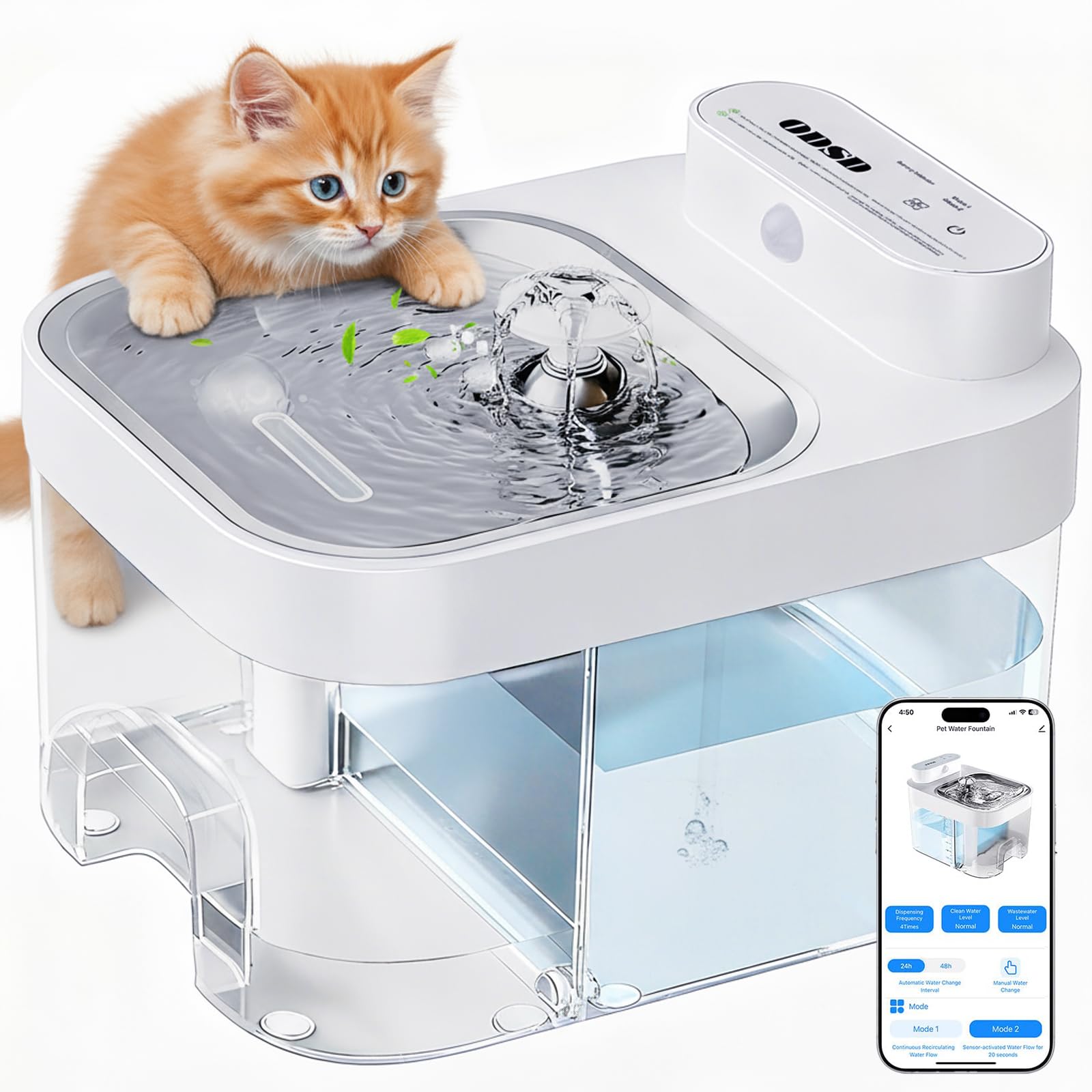
This fountain is worth buying if you want cleaner water for a cat and low filter costs, thanks to its separated tanks and app monitoring.
Pros
- Stops dirty water from recirculating with separate clean and wastewater tanks.
- Quiet and battery-backed, so it works in bedrooms or during outages.
- App lets me check levels, run drains, and get alerts from anywhere.
Cons
- Not for larger dogs—it’s sized for cats and small pets only.
- Setup and instructions felt fiddly the first time I assembled it.
- Main unit isn’t washable, so cleaning needs care.
I set this up in my kitchen and liked how the 3L clean tank meant fewer refills. The fountain runs almost silently; my cat approached without spooking when the sensor flowed.
The stainless parts and removable trays made spot-cleaning simple. Using the app was handy for monitoring water levels when I was out.
I triggered a manual refresh from my phone and got a notification when the drain finished. Battery mode kept it steady during a short outage, as advertised.
My only real hassle came during first assembly—some steps weren’t clear, and the sponge in the tray isn’t a filter, so you must rinse parts regularly. After a week, I appreciated the no-filter-cotton design; it cuts ongoing costs and keeps maintenance straightforward.
FeelNeedy Wireless Cat Fountain
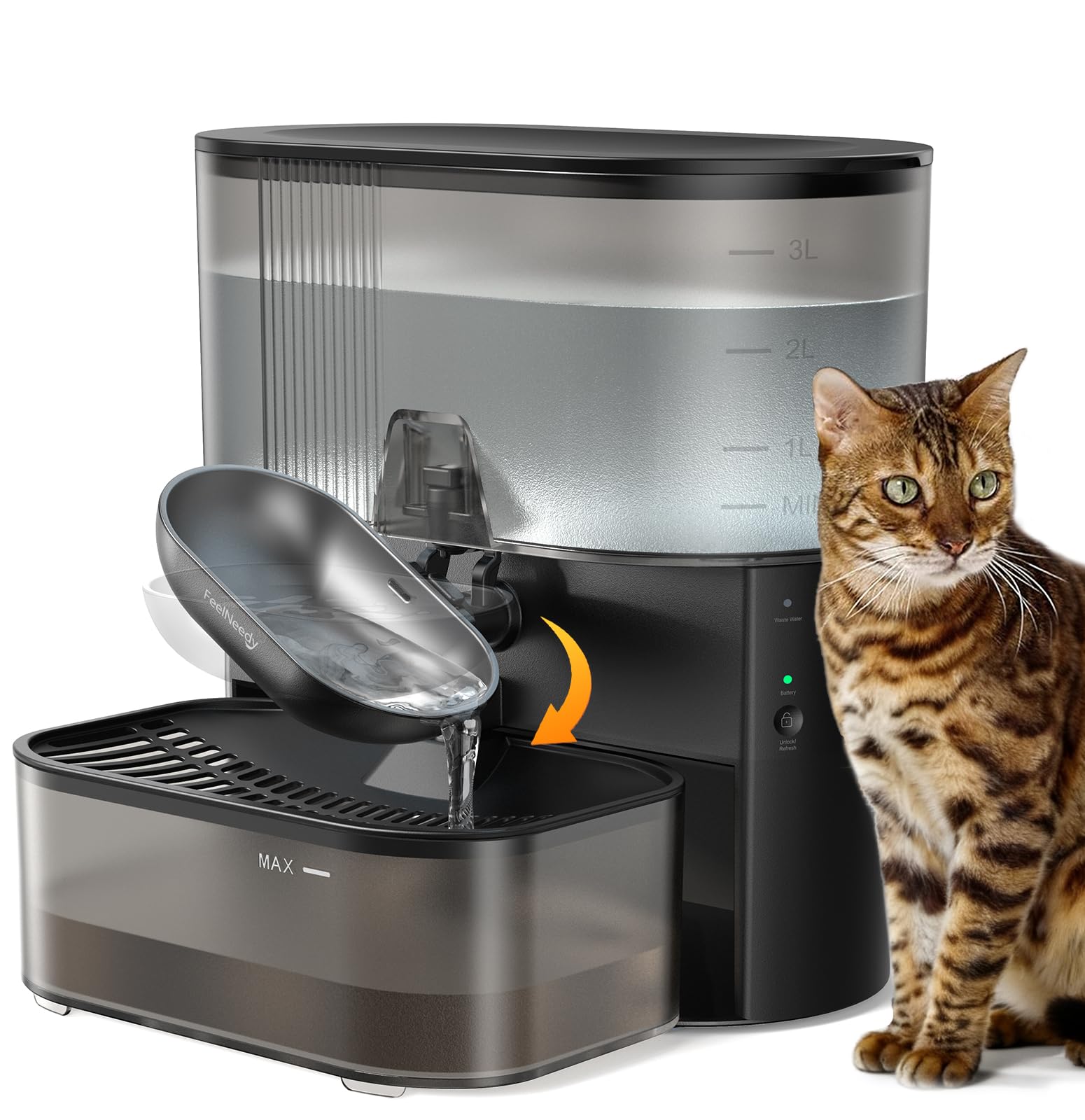
I recommend this fountain if you want low-maintenance, fresh water for small pets and long cordless run time.
Pros
- Keeps old water separate so pets drink fresher water.
- Long battery life; I recharged it only a few times in months.
- Stainless steel bowl is easy to wipe and stays cleaner.
Cons
- The automatic pour can be loud for a moment when it drains.
- Setup and occasional troubleshooting took me a few tries.
- Waste-tank behavior can be odd if the pump runs too long.
I set this up in my kitchen and my cats started drinking from it the first day. The water stayed clear longer than in my old circulating fountain.
Emptying the waste tank is simple, and the stainless bowl wipes clean quickly. Charging the battery felt very convenient; I left it unplugged for weeks.
Noise stayed very low most of the time, but the unit makes a short refill/drain sound that might bother light sleepers. A few times the pump ran longer than I expected and filled the waste side before shutting off.
I fixed that by cleaning the pump and checking seals. Overall, I liked the reduced slimy buildup and the no-filter design that saves money.
HAPAW Cat Fountain
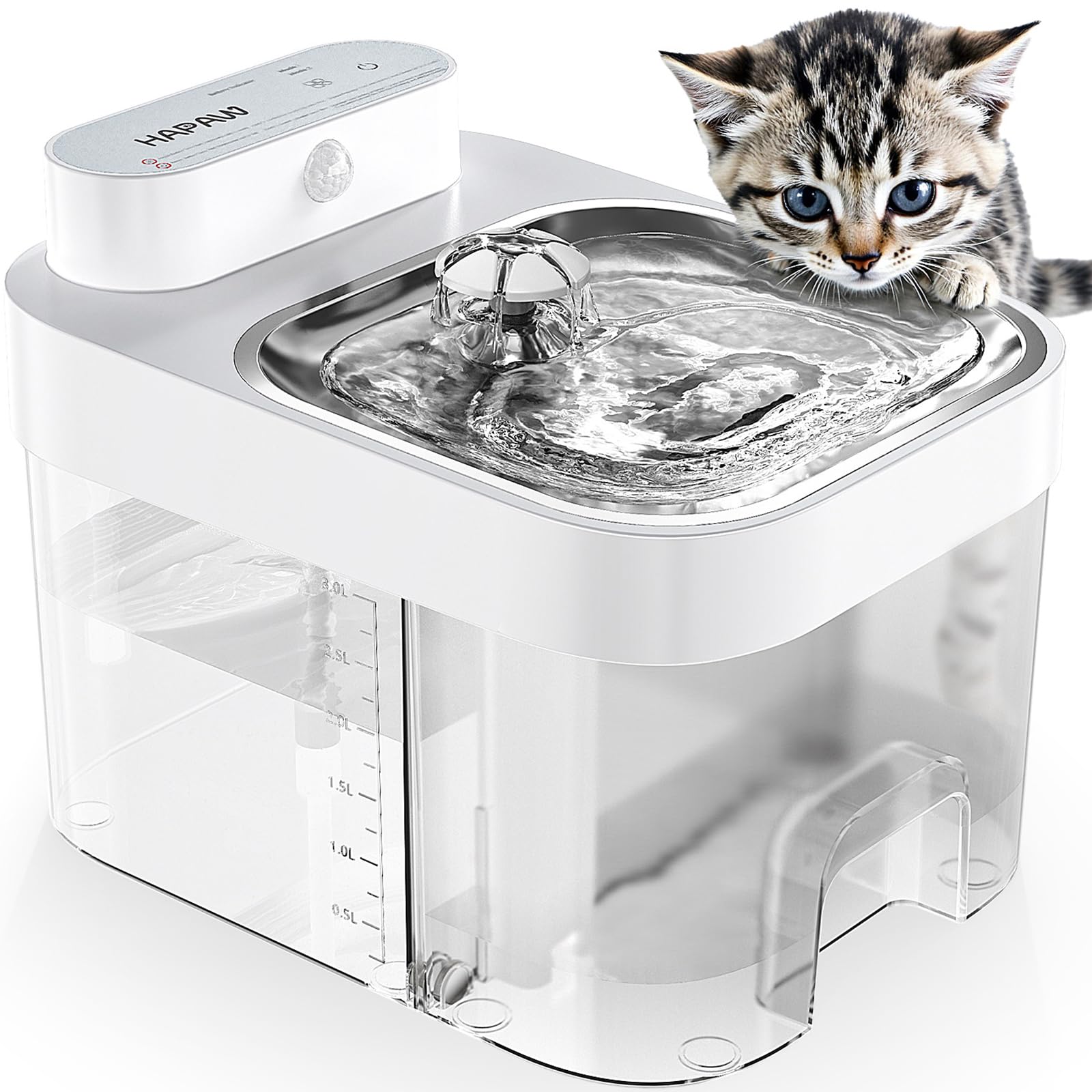
I’d buy this if you want a low-maintenance, quiet fountain that keeps clean and dirty water separate.
Pros
- Keeps drinking water cleaner by separating wastewater.
- Large 3L tank means fewer refills for short trips.
- Runs on battery or plug, so it keeps working during outages.
Cons
- Not ideal for big dogs or heavy drinkers; small tank for waste side can fill fast.
- Some units have reliability issues with charging or pumps.
- Main unit isn’t fully washable; parts need careful rinsing.
I set this up easily and my cat approached it the same day. The stainless tray looks good and the flow is whisper-quiet, so it didn’t disturb naps.
I liked the dual-tank idea immediately. Clean water stayed clear while hair and gunk collected in the separate waste tank, which made me feel better about hygiene.
Battery mode worked well during a short outage and lasted long enough to keep water available. The automatic refill has a small sensing delay, so you might see the clean side dip before it top-ups.
Cleaning felt straightforward: I rinsed the tanks and wiped the main unit. The black sponges caught debris but need regular rinsing to avoid clogs.
I ran into mixed reliability reports while using it: my unit was fine for weeks, but others reported pump or charging failures. If you buy one, test charging and watch the first few refills closely.
PETLIBRO Dockstream Fountain

I recommend this fountain if you want a smart, low-maintenance way to track a cat’s drinking and keep water flowing.
Pros
- Tracks drinking with the app so you can watch hydration.
- Removable tank and wireless pump make cleaning faster.
- Multi-mode flow and stainless tray keep water fresher.
Cons
- App needs a 2.4GHz Wi‑Fi network only.
- Filters require regular replacement and extra cost.
- Some users report pump noise or durability issues over time.
I set this up in minutes and liked how the app guided me through goals and alerts. The drink data was clear and helped me notice when my cat drank less than usual.
Cleaning felt simple compared with wired pumps. The tank lifts out, the pump detaches, and the stainless tray wipes clean without fighting cords.
Water options give my cat a choice: a steady stream or intermittent flow. The water looked cleaner with the multi-layer filter, though I did swap filters every two weeks like the app suggested.
I noticed small pump noise unless the unit sat perfectly level. The gasket can be tricky if you pull the filter cover the wrong way, so handle it gently during refills.
Overall, the PETLIBRO fountain worked well for daily use and monitoring, but plan for filter replacements and use a compatible Wi‑Fi band.
Buying Guide
I look for key features that fit my space and daily habits. Where will the separated smart water fountain actually sit? How much water flow do I really need?
I check the sensor type and where it’s placed. Good sensors should spot pets or people reliably, not go off for no reason.
Filtration matters too. Filters change the taste and affect how much work I have to do. I like units with easy-to-swap cartridges and a clear way to see when the filter’s done for.
Separation design and materials catch my eye. Separate reservoirs help cut down on cross-contamination. I want tough, food-safe materials that don’t turn cleaning into a chore.
Connectivity and controls are a toss-up. Wi‑Fi or an app can help me keep tabs on water level and filter status. Still, I appreciate simple manual controls when the app inevitably flakes out.
Maintenance and access make a difference. Removable parts and bigger openings mean I can actually get in there to clean. I also check how often I’ll need new filters and if spare parts are a pain to find.
Installation and power needs can be a dealbreaker. Some units plug in, while others need batteries. I go with whatever fits my setup and how often I want to mess with recharging or swapping batteries.
Size, capacity, and noise level all matter. Bigger reservoirs mean I refill less often. Quieter pumps are just better—especially indoors.
Here’s my quick checklist:
- Sensor reliability
- Filtration type and lifespan
- Material and ease of cleaning
- Connectivity and controls
- Power source and noise
- Size and capacity
I always skim user manuals and real-world reviews before making a decision. Sometimes, the little details others mention make all the difference.