Best Pet Stairs for Small Dogs and Cats: Stable, Compact, and Easy-to-Clean
Pet stairs help small, old, or injured pets get up to beds, couches, cars, and other high spots without having to jump or strain. You’ll find soft foam, carpeted steps, wooden stair units, and folding ramps—each with their own perks for portability, grip, or weight capacity.
I’ll stick to the types that actually work well for daily use at home and make life easier for you and your pets.
Picking the right pet stairs means matching the size, height, and strength to your animal. Weight capacity, tread surface (so they don’t slip), stair height, and how easily you can move or store them—those are the big factors.
I tried out a bunch of models, checking out the materials, step depth, and stability to find stairs that keep pets safe and fit into real homes.
Best Pet Stairs
Here’s my list after testing for size, safety, and comfort with both dogs and cats. These options should cover most homes, pets, and budgets.
EHEYCIGA 4-Step Dog Stairs
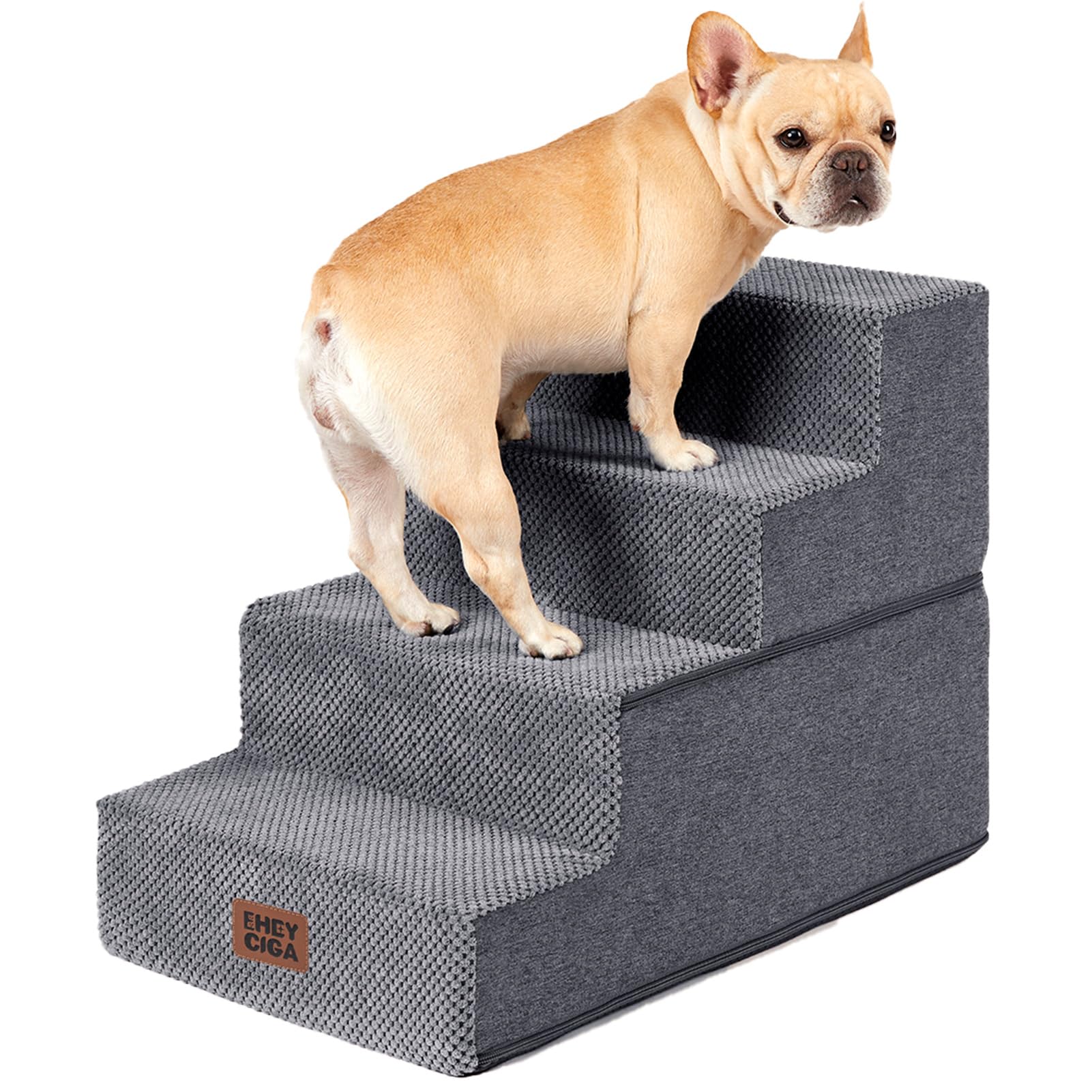
If you want a soft, foldable step that helps small dogs or cats get onto higher beds without lifting them, I’d go with this one.
Pros
- Soft, comfy steps double as a nap spot for pets.
- Foldable design can act as a small bed.
- Removable cover you can toss in the washing machine.
Cons
- Can feel a little wobbly unless you insert the hard boards.
- Foam takes 24–48 hours to expand after unpacking.
- Not great for heavy dogs—best for small breeds.
I set these stairs by my couch and my small dog figured them out right away. The fleece cover is soft, and he even curled up on the top step for a nap.
Unpacking took some patience. The foam arrived compressed and slowly puffed up over a day. Once I slid the hard support boards in, the stairs felt a lot steadier but a little firmer under his paws.
Cleaning’s easy. I just unzip the cover and throw it in the washer when it gets hairy or dirty. The stairs are light, so I move them from room to room, and they fit well against beds and sofas. Wouldn’t trust them for a big dog, though.
Aodisman 3-Step Pet Stairs

If you need something stable, light, and comfy for small or older pets to get onto couches or low beds, this is a solid pick.
Pros
- Soft, grippy surface helped my cat avoid slipping.
- Lightweight and easy to move with the built-in handle.
- Foam pops up into shape after unpacking.
Cons
- Vacuum-packed foam needs 48–72 hours to fully expand.
- Not rigid enough for big dogs or pets that jump hard.
- Cover can show wear after heavy use.
My elderly cat used these to get onto the couch. The corduroy-like cover gave her enough traction, and she climbed up after a few tries.
Moving these steps around is simple. They’re light, and I just grab the handle and carry them from the living room to the bedroom.
If you need something heavy-duty for a big dog, look elsewhere. But for small dogs, puppies, or older cats, these take the pressure off their joints.
Cumbor Baby Gate (30–46″)
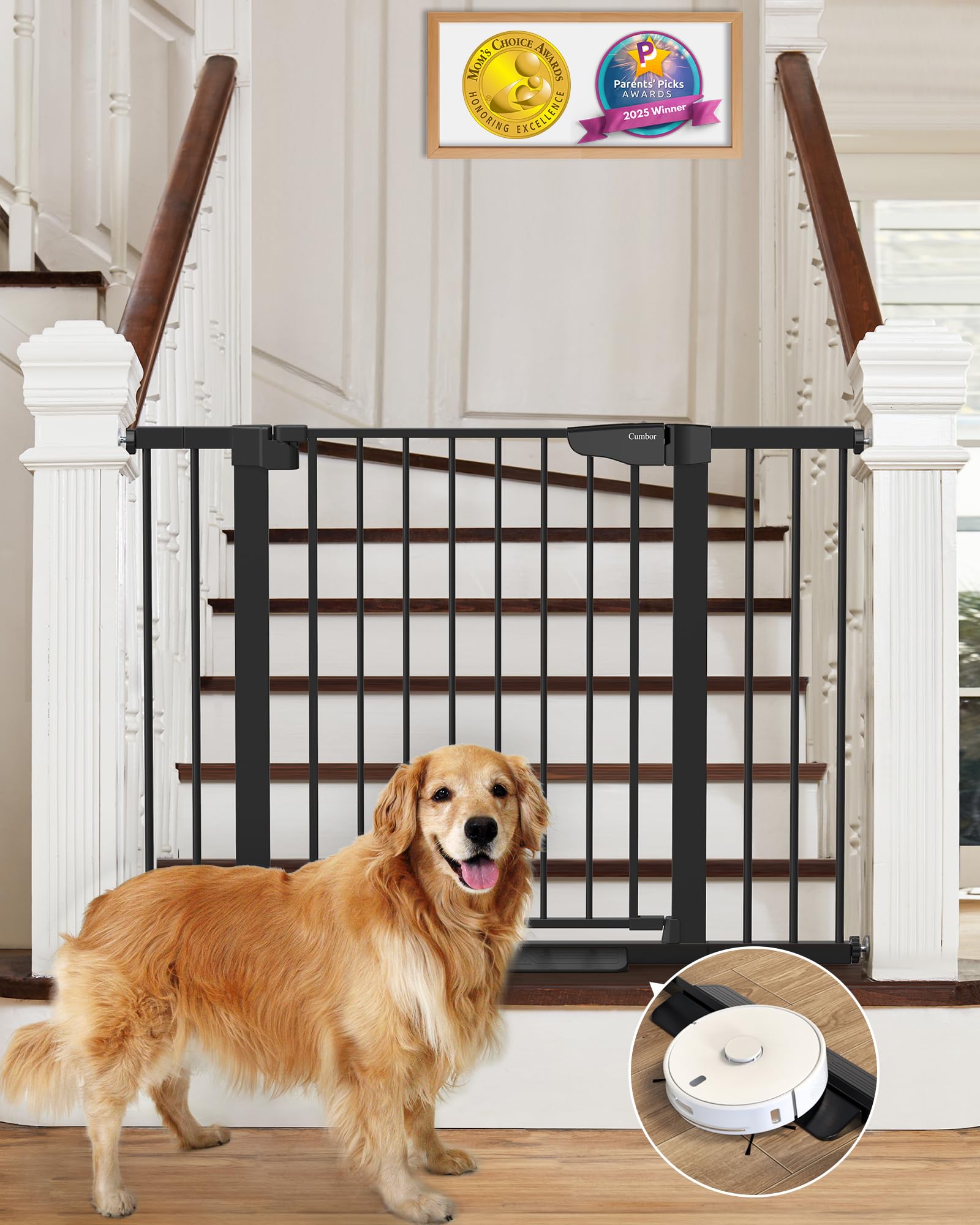
If you need a sturdy, easy-to-use barrier for stairs or wide doorways, I’d recommend this gate.
Pros
- Solid metal build—felt stable even with hyper pets.
- Auto-close and one-hand latch make life easier.
- Pressure or hardware mount gives flexible placement.
Cons
- Metal threshold and bottom bar can catch small paws or toys.
- Double-lock has a slight learning curve if you’re in a rush.
- Y-bolt adapters might not fit every banister—check first.
I set up this gate at the top of my stairs and liked how solid it felt once tightened. The steel frame held up when my dog bumped it, and the wide opening made carrying laundry through less awkward.
The auto-close worked well; the door swung shut and latched most of the time with one hand. Sometimes I had to slow down to line up the double-lock, but that extra step made me feel safer since my toddler couldn’t push it open.
Mounting was straightforward. I started with the pressure fit, then switched to hardware for a permanent setup. The bottom support bar sits low and can snag little things, so I moved toys away from the threshold.
Gardner Pet 2‑in‑1 3‑Step Stairs
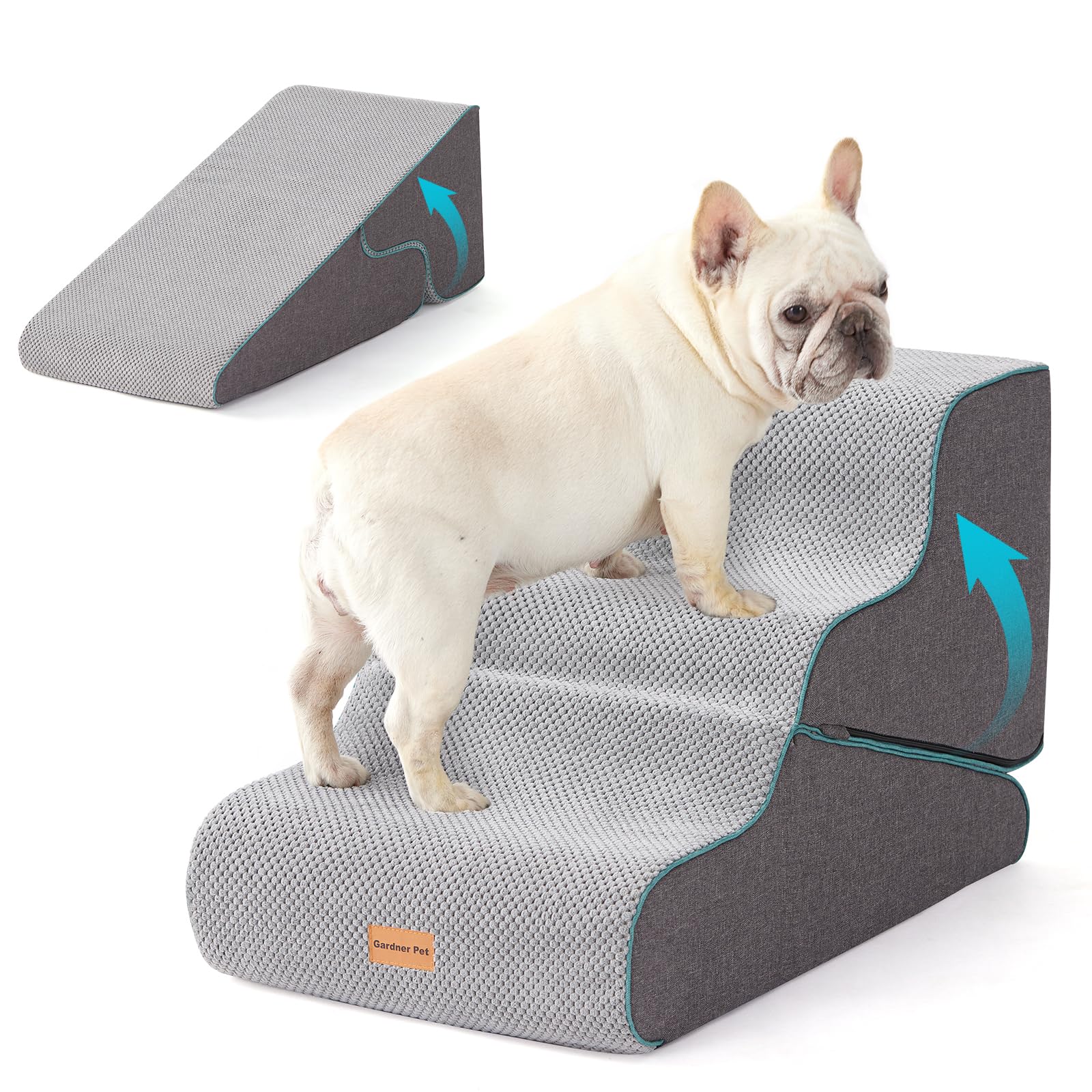
If you want soft, light stairs that can convert to a ramp and make things easier on your small to medium dog’s joints, give this one a look.
Pros
- Soft but supportive foam keeps its shape.
- Switches quickly between stairs and ramp.
- Removable, machine‑washable waterproof cover.
Cons
- Vacuum packing leaves wrinkles that need a day to smooth out.
- Foam core can’t be washed if it gets dirty.
- Not for dogs above the weight limit or heavy chewers.
Unboxing was quick—the foam popped up faster than I thought. It felt dense but gentle, and the cover looked like it’d resist spills.
I set it by the couch in seconds—no tools or assembly needed. My dog stepped up right away. The incline felt low and easy, and he didn’t hesitate once he tried it.
Switching to ramp mode is simple, and I like that you can change the shape for different spots. Cleaning is easy—just zip off the cover and wash it. The foam itself isn’t washable, so keep it away from chewers and moisture.
Chic Threads 3-Step Dog Stairs
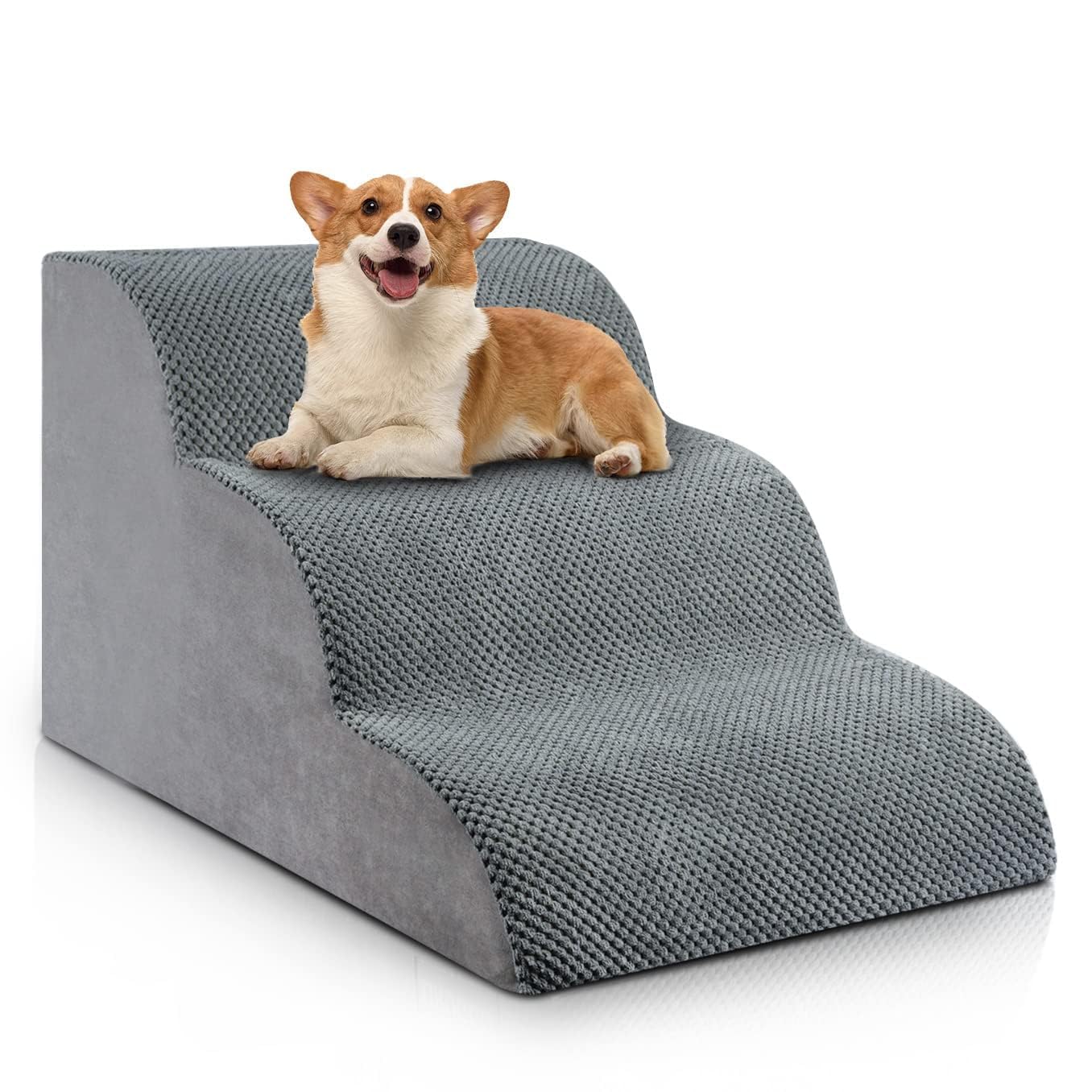
If you need lightweight, soft steps for a small dog or cat to reach a couch or low bed, these are worth considering.
Pros
- Soft, springy foam feels gentle under paws.
- Machine-washable cover for easy cleaning.
- Non-slip bottom holds on hardwood and carpet most of the time.
Cons
- Foam takes 24–48 hours to fully expand after unboxing.
- Not built for dogs over the small weight limit.
- Cover zippers can show wear if pets chew them.
I unboxed these and watched the foam puff up in about a day. The steps felt plush but supportive when my small dog climbed them, and the corduroy cover gave a nice grip underfoot.
Moving the stairs from room to room was simple because they’re light. The non-slip base worked on my hardwood, though I noticed a little shifting when my dog lunged quickly.
I washed the cover after a muddy walk and it came out clean. The concealed zipper looks neat, but I’d hide it from chewers—a few buyers mentioned damage there.
These stairs worked well for my small, older dog to reach the couch without strain. They’re best for light use and pets within the weight range.
Buying Guide
I always look at size and height first. Measure your pet and the spot where the stairs will sit.
Steps should let your pet climb without needing to jump. That’s non-negotiable for me.
Step depth and rise matter a lot. Shallow steps or a high rise can strain joints, especially for older pets.
Wider, lower steps work best for small breeds or seniors. It just makes sense for their comfort.
Materials and build come next. I want a solid frame and non-slip surfaces.
If I move the stairs often, lightweight materials make life easier. No one wants to lug around something heavy every day.
Stability is huge. The stairs shouldn’t wobble when my pet uses them.
I always check the weight limit and match it to my pet’s actual weight. No guesswork here.
Cover and cleaning are on my mind too. Removable, washable covers really save time.
Water-resistant materials help fight stains and odors. That’s a bonus if your pet’s a little messy.
Foldability and storage? Super handy. Foldable stairs are easier to tuck away when you don’t need them.
Hinges and locks should feel secure. Wobbly hardware is a dealbreaker.
Extra features can make a difference. Handrails, ramps, or carpeted steps help some pets more than others.
Non-skid feet protect your floors. I always look for that.
| Feature | Why it matters |
|---|---|
| Step depth & rise | Comfort and joint safety |
| Weight capacity | Prevents collapse |
| Non-slip surface | Prevents falls |
| Material & padding | Durability and comfort |
| Portability | Ease of moving/storage |
| Washable cover | Hygiene and maintenance |
If I can, I test the stairs before buying. I check the fit, firmness, and watch how my pet reacts.
Best Pet Travel Collapsible Bowls for On-the-Go Feeding and Hydration - Pawsome Delights
June 16, 2026 @ 5:09 pm
[…] I tested a bunch of collapsible bowls to find ones that fold compactly, don’t leak, and are easy to clean for everyday […]
Best Disposable Puppy Pads: Top-Rated Options for Housetraining and Odor Control - Pawsome Delights
June 17, 2026 @ 4:14 pm
[…] These are my go-to for affordable, reliably absorbent pads that work for training and older dogs. […]
Best Soft-Sided Pet Backpacks for Hiking and Outdoor Adventures (2026 Guide) — Top Picks, Features, and Buying Tips - Pawsome Delights
June 22, 2026 @ 1:28 pm
[…] tried this pack on a few short hikes with my cat and a small dog. The mesh sides let them see out and breathe, and the zip-back opening made it easy to reach in and […]